


MMX Hill Dash
4.417.38K Reviews
App Specs
- Version
- 2.01.14226
- Updated On
- License
- Free
- Downloads
- 10,000,000+
- Developer
- Hutch Games
- Categories
- Racing
- Platform
- Android
Screenshots
 Analysis by AppCompare
When it comes to racing games on mobile, the options are endless. But every once in a while, something like MMX Hill Dash zooms into my life and leaves me hooked. If you’re into high-octane, adrenaline-pumping action, stick around because this game might just be your next obsession.
Why the first goals matter
The appeal here is not simply reaching the finish line. A run asks me to manage a vehicle over uneven ground, and even a short stretch can turn into a small problem-solving exercise: when to build speed, when to ease off, and how to keep the truck from pitching too far. That makes the first goals feel approachable without making the driving automatic. I can try a section, notice where my timing went wrong, and immediately have a practical reason to try again.
That quick retry loop suits the game’s hill-driving focus better than a long, uninterrupted race would. I don’t need to settle in for a full session to get something out of it; I can use a spare moment to practise a tricky approach or improve a run. For a player who likes bite-sized challenges, that is a genuine strength. Someone looking for extended circuits, realistic motorsport rules, or careful simulation should expect a very different kind of racing experience.
What progress feels like in practice
Progress is most satisfying when I treat it as a sequence of small lessons rather than a straight march through content. A failed attempt can show whether I carried too much speed into a rise or lost control on the way down. On the next try, I can change one thing instead of pressing forward blindly. That makes improvement feel connected to my driving, rather than just to time spent playing.
It also helps to set a modest target for a session. I might aim to clear one troublesome obstacle, get through a section more cleanly, or make a run that feels controlled instead of simply fast. This is a useful way to keep the game enjoyable when a level takes several attempts. If every session has to deliver a major unlock or a dramatic breakthrough, the repeated learning curve may feel slower than you want.
Reading the difficulty curve
The challenge comes from balancing momentum with control, so raw acceleration is not a reliable answer to every obstacle. I find it more useful to think in terms of how the truck will land and what the next piece of terrain demands. A jump that looks successful in mid-air can still leave me badly positioned, while a slightly more restrained approach may make the following section easier. That forward-looking judgement is what gives the driving its texture.
When I get stuck, I try to diagnose the moment just before the mistake, not only the crash itself. Was the vehicle already leaning? Did I arrive too quickly to correct it? Did I make a jump without leaving enough control for the landing? Changing one input or adjusting the timing makes retries more informative. The trade-off is that this kind of learning depends on patience: players who want the game to explain every failure in detail may find the feedback less direct than they prefer.
Worth Reading Before You Choose

EA SPORTS FC Mobile 26 Is a Bigger Football Game, but It Takes Time

Flipboard Shows What News Apps Must Do Beyond the Feed

Switching to Android Auto Means Rethinking Your Driving Routine

Google Calendar Makes a Crowded Week Easier to Manage

Ludo King Makes the Most of the Minutes Between Plans

Baby Panda World Brings Quick Play to Modern Phones, but Its Game Library Feels Busy
How the game keeps asking for another run
The same short-run structure that makes this easy to pick up can also make it tempting to keep replaying a difficult section. That can be rewarding when I’m actively refining a technique, but frustrating if I keep repeating a mistake without changing my approach. I try to stop after a few unproductive attempts, take a short break, and return with one specific adjustment in mind. It is a simple way to keep challenge from turning into irritation.
Competition can add another reason to improve, but it is not the only measure of whether a session went well. A personal best or a cleaner run can be satisfying even when I’m not focused on beating someone else. If leaderboard pressure is what usually keeps you playing, that competitive element may appeal; if you would rather explore at your own pace, it is easy to make the driving itself the goal.
Who will enjoy this style of racing?
I’d recommend this to someone who likes arcade driving, physical-feeling vehicle control, and short challenges that reward repeated attempts. It is especially well suited to quick breaks: a commute wait, a pause between tasks, or a quiet few minutes at home. The basic appeal is easy to understand, but getting a smoother run gives experienced players something to work on too.
I would steer a friend toward a more conventional circuit racer if they want licensed cars, long races, close cornering, or a strong simulation feel. The hill-focused format is the point here, not a substitute for every kind of racing game. Likewise, if retries tend to annoy you more than motivate you, this may not be the best choice for winding down. The controls ask for attention, and the fun often comes from learning rather than simply cruising.
A useful way to approach a session
One practical habit is to avoid changing several things at once. If a run goes wrong, pick a single adjustment—such as easing off before a rise or being more cautious about the landing—and see whether it helps. This makes the cause and effect easier to understand. It also prevents a common frustration in physics-based driving: making a different mistake while trying to fix the first one, then having no clear idea what actually improved.
For a short everyday session, I’d choose one level or obstacle to focus on, rather than treating every attempt as a demand to progress. If I’m tired or distracted, I keep the goal simple and stop when the driving stops feeling enjoyable. This game is at its best when I’m alert enough to react to the terrain but not so invested in a perfect run that every crash feels like wasted time.
A Thrill Seeker's Paradise
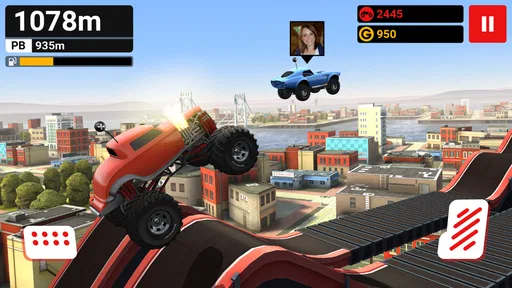
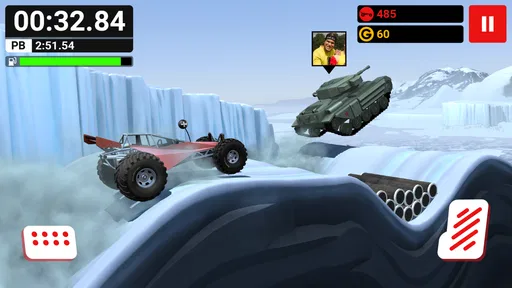
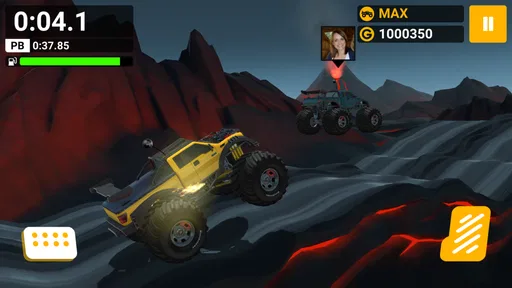
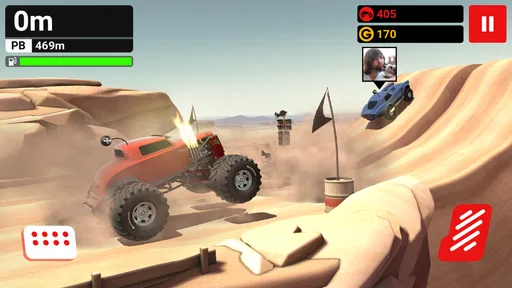
So, what's the deal with MMX Hill Dash? Right from the get-go, it's all about fast-paced fun. You’re thrown into a world of monster trucks, wild terrains, and insane stunts. The game is all about timing and precision. It’s not just about speed; it's about mastering the art of the climb and the descent.
Gameplay Mechanics
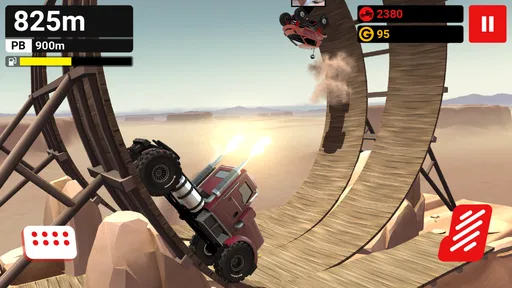
Let’s dive into the nitty-gritty of the gameplay. You start with a basic truck and a simple track, but don't let that fool you. The controls are straightforward—accelerate, brake, and tilt. Sounds easy, right? Well, the real challenge lies in balancing your truck as you tackle steep hills and crazy loops without face-planting into the ground. It's a delicate dance between power and control.
The progression system is pretty satisfying. You earn coins and upgrades as you complete levels, which can be spent on pimping out your ride with better tires, stronger engines, and more. It's all about finding that sweet spot where your truck is a beast on the track.
Visuals and Sound
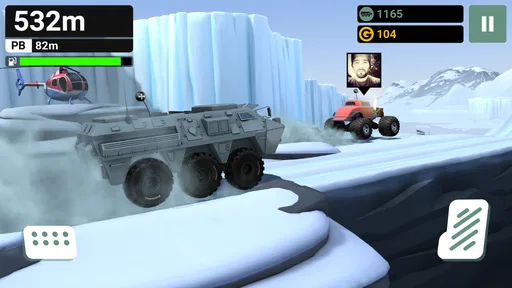
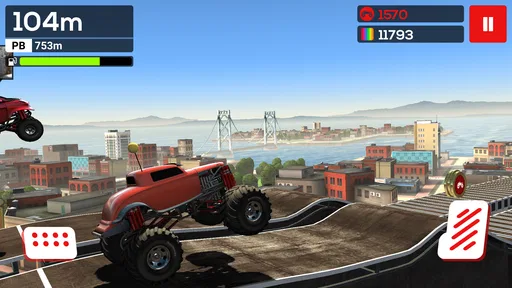
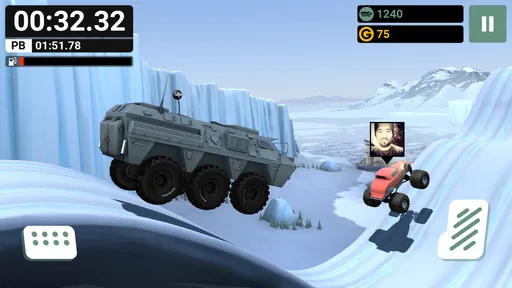
Visually, the game is a treat. The landscapes are colorful and varied, from sandy deserts to icy mountains. The trucks themselves are detailed and look badass, especially when you’re flipping through the air. The sound effects amp up the excitement, with roaring engines and crunching metal that make you feel every crash and burn.
Challenges and Levels
One of the things that keeps me coming back is the sheer variety of tracks and challenges. Each level introduces new obstacles and requires a different strategy. Whether it’s timing your jumps perfectly or managing your fuel, there’s always a new challenge to conquer. Plus, there's a leaderboard to fuel your competitive spirit. Who doesn’t love a bit of friendly competition?
Multiplayer Madness
Speaking of competition, if you’re a fan of going head-to-head with friends or strangers, the multiplayer mode has got you covered. Racing against others adds a whole new layer of excitement. It’s one thing to race against the clock, but battling it out for the top spot against real opponents? That’s where the magic happens.
Why MMX Hill Dash Stands Out
Now, you might be thinking, "Aren’t all racing games kind of the same?" Trust me, MMX Hill Dash has that special something. It’s the blend of simplicity and challenge that keeps it engaging. The game doesn’t just rely on flashy graphics or gimmicks; it’s the core mechanics that make it a standout.
There's also something incredibly satisfying about nailing a perfect run on a track that’s been giving you grief. The sense of achievement is real, and the game does a great job of rewarding your efforts, making every success feel earned.
Final Thoughts
In the end, MMX Hill Dash is a wild ride from start to finish. Whether you’re a casual gamer looking for a quick thrill or a hardcore player aiming for the top of the leaderboard, this game has something for everyone. It’s the kind of game that you can pick up and play anytime, and it’s equally enjoyable whether you have five minutes or an hour to spare.
If you’re ready to take on the hills and unleash your inner daredevil, give MMX Hill Dash a spin. Just be prepared for a few crashes along the way. But hey, what’s a little danger when you’re having this much fun?
How it compares with other mobile racers
As a mobile racing game, this sits in a different lane from the usual circuit racers. Those games tend to reward braking points, cornering lines, and maintaining speed around a lap. Here, the problem is more vertical: a slope, a jump, or a landing can decide whether the rest of a run stays manageable. I’d choose it when I want a compact physics challenge, not when I’m craving a long race with a pack of cars and a familiar track layout.
That distinction matters when deciding whether it fits your phone-game rotation. Its repeated attempts feel closer to learning a tricky platforming section than to settling into a conventional race. Players who enjoy adjusting their approach after a mistake are likely to find that satisfying. If you prefer winning through careful overtaking or tuning a racing line, another mobile racer will probably serve you better.
Progression, spending, and staying in control
The game is free to download, and optional in-app purchases range from $1.99 to $39.99 per item. I’d go in treating purchases as optional rather than as part of the basic appeal: first work out whether you enjoy the driving and the retry rhythm. If you do, the upgrade path can add another goal; if you don’t, spending is unlikely to make the core handling feel like a different game.
Upgrades can make progress feel tangible, but I wouldn’t use them as a substitute for learning how a particular section behaves. When a run repeatedly fails at the same point, first experiment with timing and control. That gives you a better sense of whether the obstacle is asking for a different approach or whether the vehicle itself needs attention. It’s a more useful way to spend effort than making changes simply because an upgrade is available.
For context, the game is from Hutch Games, has been available since May 25, 2016, and its current version is 2.01.14226. It is rated for Everyone, with Android 7.0 as the minimum operating system. The game has a 4.4 average from around 292,000 ratings, while its review count is around 17,000 and installs are over 10 million. Those figures suggest a well-established audience, but popularity alone cannot tell you whether its particular mix of short runs and careful vehicle control will suit you.
Choosing the right expectations
A reasonable question is whether this is friendly to a newcomer. The basic driving idea is easy to grasp, so I don’t think you need racing-game expertise to start. The harder part is building consistency: a simple control scheme does not mean every landing is simple. I’d expect some trial and error, especially if you instinctively hold acceleration rather than adjusting to the shape of the ground.
Another useful question is whether it works for brief play or demands a long commitment. Its obstacle-focused runs make it a natural fit for spare minutes, though a difficult section can stretch a quick session if you keep trying to perfect it. I’d set a stopping point before beginning when time is tight. That way, a short break stays short even if one hill is being stubborn.
There is also a choice between chasing scores and simply enjoying the driving. The leaderboard and competition can give goal-oriented players a reason to refine a run, while a more relaxed player can focus on handling and personal improvement. I wouldn’t treat competition as compulsory; the game’s central challenge still works when the only result that matters is a cleaner attempt than the last one.
My progression verdict
The strongest reason to keep playing is the link between control and progress. Goals feel worthwhile when they encourage a better run, and a failure can become useful if it points to a decision I can change next time. The weaker side is the same loop: when I’m not learning from repeated attempts, retries can feel like a demand rather than a reward. Taking a pause or narrowing the goal to one obstacle helps, but it won’t suit every mood.
Hutch Games’ hill racer is a good pick for players who like short, demanding bursts and can enjoy gradual improvement. I’d pass it over for a more conventional racer if my priority were long-form competition, realistic handling, or relaxed cruising. For everyone else, the best test is simple: try a few runs and notice whether each crash makes you curious about a better approach. If it does, the progression has a satisfying reason to continue; if it only makes you impatient, there are plenty of other ways to race on mobile.
Pros
- Stunning graphics enhance gameplay.
- Wide variety of vehicles to unlock.
- Challenging levels keep players engaged.
- Smooth controls for easy maneuverability.
- Regular updates add new content.
Cons
- In-app purchases can be costly.
- Requires constant internet connection.
- Ads can be intrusive at times.
- Limited customization options.
- May drain battery quickly.
FAQs for MMX Hill Dash
What is MMX Hill Dash and what can I expect from the gameplay?
MMX Hill Dash is a thrilling, physics-based racing game where players navigate a variety of challenging tracks with monster trucks. Expect intense gameplay featuring steep hills, obstacles, and jumps. The game emphasizes speed and control, requiring players to carefully balance their vehicles to avoid crashing.
Is MMX Hill Dash available for both Android and iOS?
Yes, MMX Hill Dash is available for download on both Android and iOS platforms. You can find it on the Google Play Store for Android devices and the Apple App Store for iOS devices. Ensure your device meets the app’s system requirements for optimal performance.
Are there in-app purchases in MMX Hill Dash?
MMX Hill Dash is free to download and play, but it does offer in-app purchases. These purchases can enhance gameplay by providing access to new vehicles, upgrades, and other features. While not necessary to enjoy the game, they can enhance your racing experience.
What devices are compatible with MMX Hill Dash?
MMX Hill Dash is compatible with a wide range of smartphones and tablets running on Android and iOS. To ensure smooth gameplay, it's recommended to have a device with a robust processor and sufficient RAM. Always check the app store listing for specific system requirements.
How can I improve my skills in MMX Hill Dash?
Improving in MMX Hill Dash involves mastering the controls and understanding the physics of the game. Spend time practicing on different tracks to learn the best ways to handle your vehicle. Upgrading your truck and experimenting with various strategies can also enhance your performance.


